Alpine scenery
Alpine scenery
Flow trails
Technical riding
Bike park jumps
E-bikes
100 KM+
Marked mtb trails
LIFT ACCESS
TO THE SUMMITS
3000m
Ride at altitude
MTB & E-MTB
Welcome
Mountain biking in zermatt
Zermatt built its reputation on skiing. The biking has been quietly catching up for years. The Matterhorn Paradise has over 100km of trails between 1,400m and 3,100m altitude, a lift system that puts you at altitude with no effort, and a set of purpose-built flow trails that would hold their own in any dedicated bike resort.
Choose your adventure
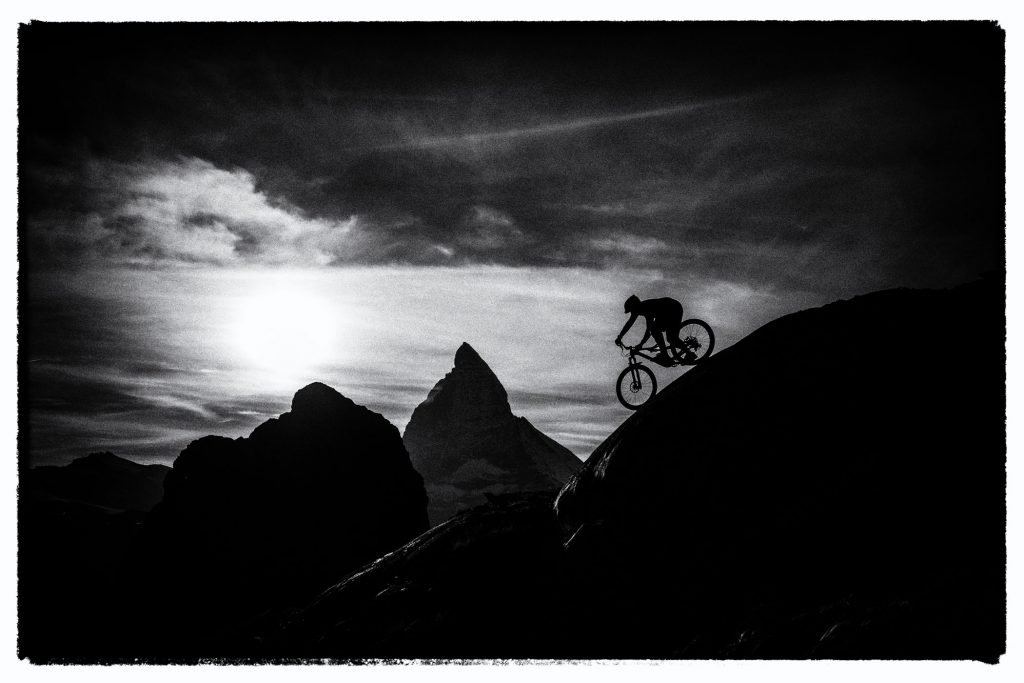
Zermatt has something for every type of rider. It is different to Verbier or Les Gets. It doesn’t have the same volume of purpose-built trail that some dedicated bike destinations do, and it isn’t trying to be them. What it has is a a mix of high-alpine terrain, technical single track, narrow ridge traverses and pine and larch forest descents, all with views that most bike destinations can’t come close to. There are of course the mountain gravel roads too.
In a similar way to the skiing here the riding suits people who want a real mountain experience, not just lap after lap on a bike park trail. That said, the flow trails are excellent and the lift access is generous, so there’s plenty for riders who want uncomplicated descents too.
FLOW
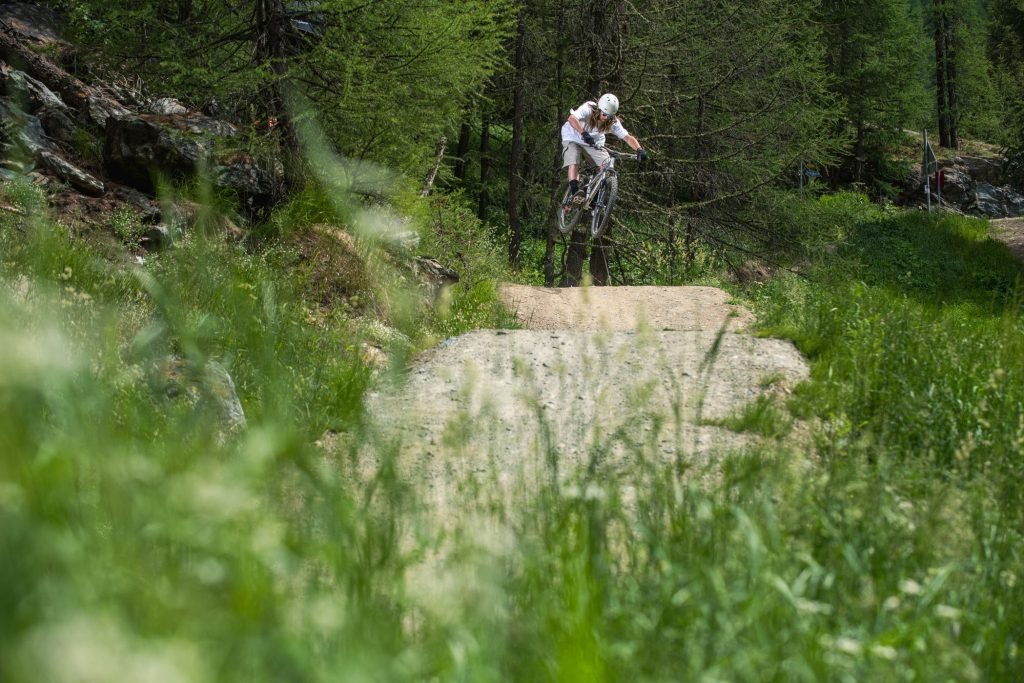
Smooth, flowing mountain trails with a range of lenghts and levels there’s something for everyone.
Perfect for your first day.
ENDURO
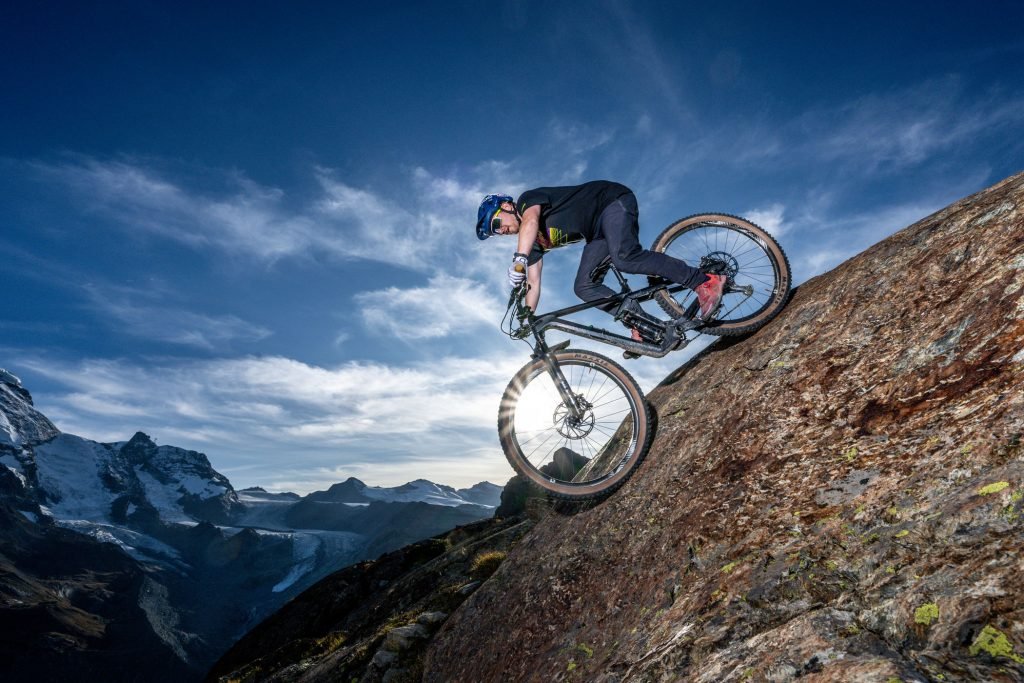
Technical descents and alpine singletrack.
Great for more experienced riders.
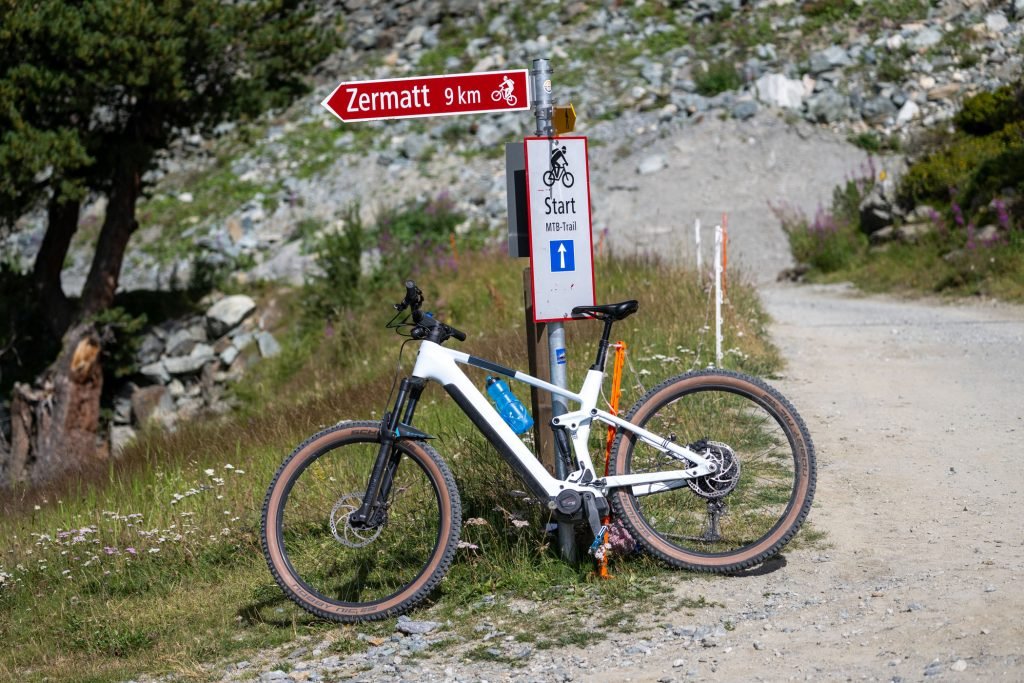
E-BIKE
Travel further, explore the mountains and find the restaurants.
Big days made possible
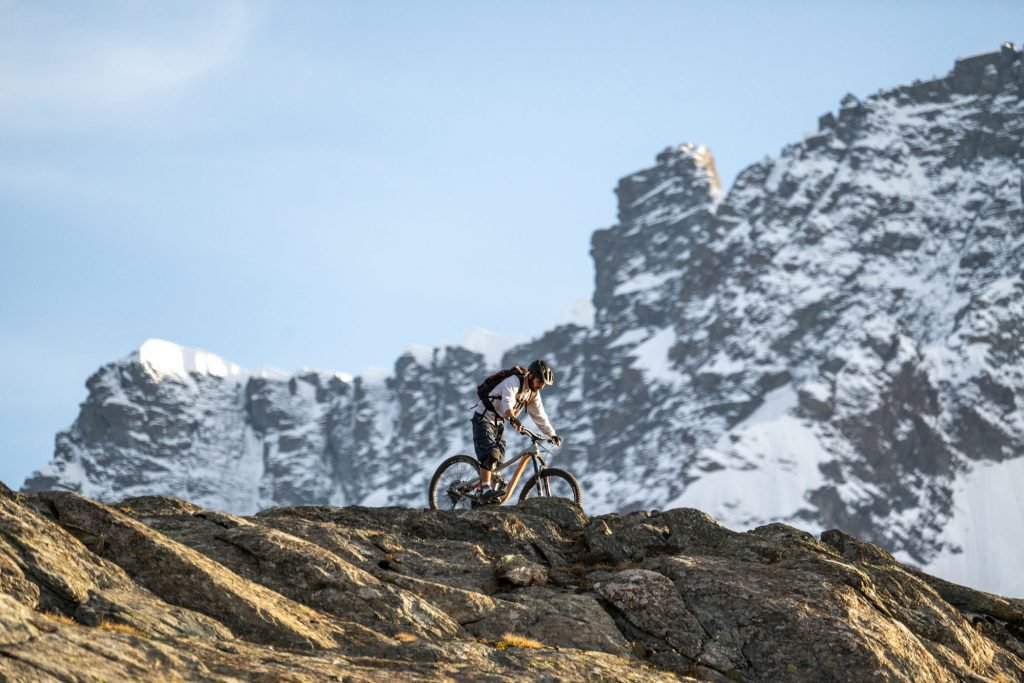
NATURAL TRAILS
Remote, rugged trails to explore.
For the adventure seekers.
The trail network
Flow trails
These are the obvious starting point if you’re new to the area or want to warm up before tackling something more committing. The council has invested heavily in them over the years and it shows.
There are four main flow trails: the Blauherd Trail (opening July 26) (D4), the Riffelberg Flowtrail (D3), the Moos Flowtrail (D1), and the Sunnegga Flowtrail (D2). The D-ratings run from beginner-friendly to more demanding, so there’s a sensible progression if you want to work up through them. The Sunnegga flow trail runs almost all the way from Sunnegga down to the valley — it’s one of the longer ones and well worth the ride. There’s also a Bike Zone Schali and a mobile pump track in Tasch for those who want to work on technique.
Natural trails and mountain routes
Beyond the flow trails, the mountain opens up considerably. The ski runs you know from winter become something different in summer, blue slopes turn into flowing tracks, red and black slopes into technical single track with steep sections and tight switchbacks.
For riders who want to earn their descents, the fire road climb to Sunnegga involves 600m of ascent and rewards you with numerous descent options. Schwarzsee from town is a leg-burner with over 1,000m of climbing, with flowing trails down towards Stafelalp and across to Zmutt, or a steeper technical line direct to Furi via Aroleid.
For those who want distance rather than pure vertical, the Europaweg route is worth knowing — take the lift to Blauherd, ride technical single track to Tuftern, then 30 minutes of pedalling before over an hour of downhill to Täsch. There’s also a 35km route all the way from Zermatt to Visp. summitskischool
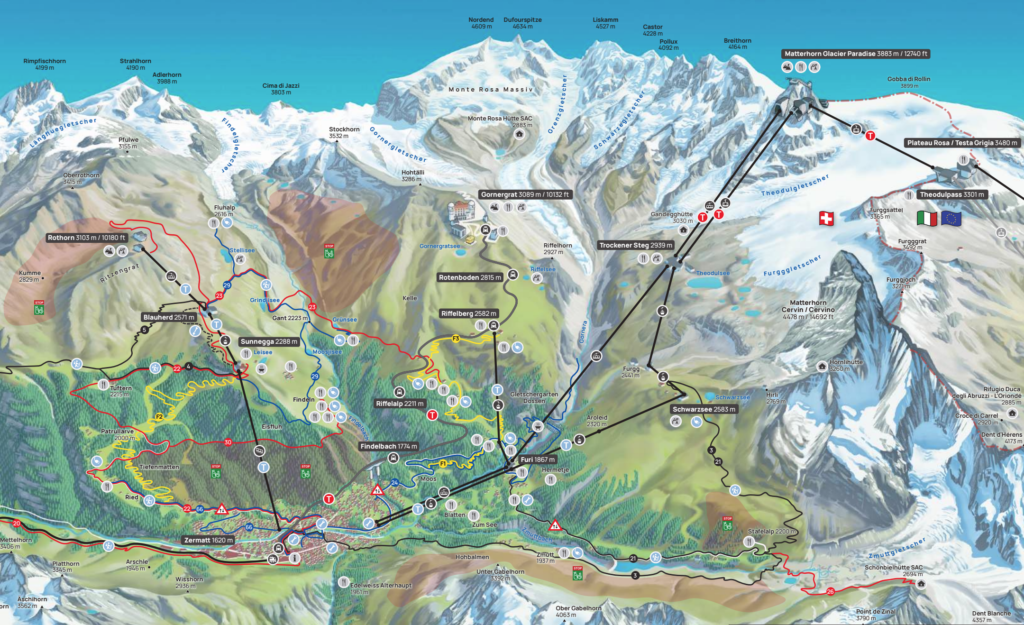
DISCOVER THE TRAILS
Lorem ipsum dolor sit amet, consectetur adipiscing elit. Ut elit tellus, luctus nec ullamcorper mattis, pulvinar dapibus leo.
Using the lifts
The lift system is your friend here, and the same logic applies as in winter, use it to get up, then pick your line down. Bike-specific tickets are available and worth having if you’re planning a full day. Check the current bike ticket options on the Zermatt Matterhorn website before you go, as the passes and pricing update each season. zermatt
Unfortunately you are no longer allowed to take bikes on the Gornergrat train at any time of day. You can still access this are when the Riffelberg express is open, especially if you add an e-bike to the equation.
One thing to know: all the trails above are technically hiking paths, and biking them is permitted as long as all path users show respect for each other. Slowing down and making sure not to scare hikers is the norm, and a friendly greeting as you pass goes a long way. This matters more in July and August when the popular trails are busy. Early morning or evening riding largely solves this. summitskischool
Hiring a bike
If you don’t travel with your own bike then there are plenty of options to hire. Slalom Sport, Matterhorn Sport and Bayard all offer rental in the village, with good-quality bikes available including e-MTBs. Note that Bike Arena, which used to be listed in some older guides, is no longer operating – the shops above are your current options. zermatters
E-bikes are worth serious consideration here. Many of the trails around Zermatt are steep, and without an e-drive the climbs can become a significant part of the day. If you’re here for the descents rather than the fitness, an e-MTB makes the whole thing considerably more enjoyable. You need to be at least 16 to hire one. zermatters
Getting coaching or a guide
If you’re new to mountain biking or want to make the most of the terrain, Zermatters offer guided tours, technique courses and tailor-made experiences to suit all levels, from beginners on wide forest roads to experienced riders on demanding enduro terrain. A guide who knows which trails suit your ability is worth it here. The mountain is big enough that you can spend half a day finding out the hard way that a route is above your level. zermatters
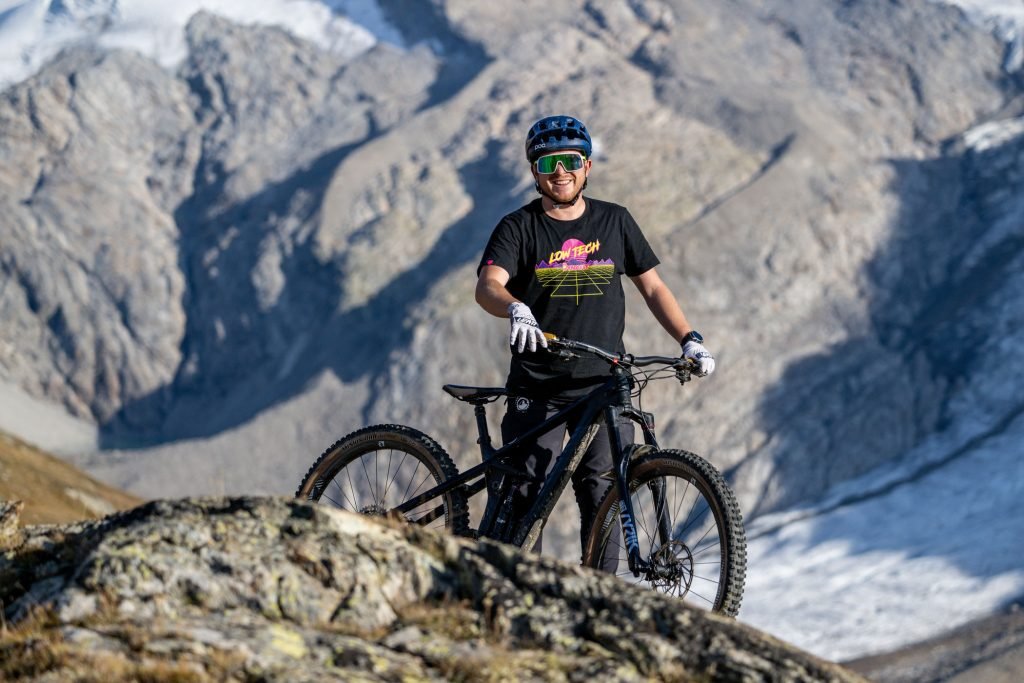
What to bring
A helmet is non-negotiable. Beyond that: gloves, layers (the temperature at 3,000m is not the same as in the village), water, sun protection and, for longer days, something to eat. A spare inner tube is worth carrying if you’re heading onto the natural trails away from the flow routes.
Afternoon thunderstorms can build in July and August. The same advice as for hiking applies on a bike – keep an eye on the weather if it’s building and be ready to get off the mountain.