There’s skiing available up on the glacier all year round, but we think of the start of winter proper as being the date that the Sunnegga and Gornergrat areas open their pistes. This is normally at the end of November.
Due to the artificial snow making system, you’re sure to have great piste skiing on an extensive number of runs. In fact, the first half of December is an awesome time to visit. The slopes are not crowded and you can blast around fine-tuning your technique and getting the legs up to speed before the winter really kicks in. You are normally limited to the pistes though, it would need to be an exceptional good snow year to have enough of a base to ski off piste in November.
When do they make snow?
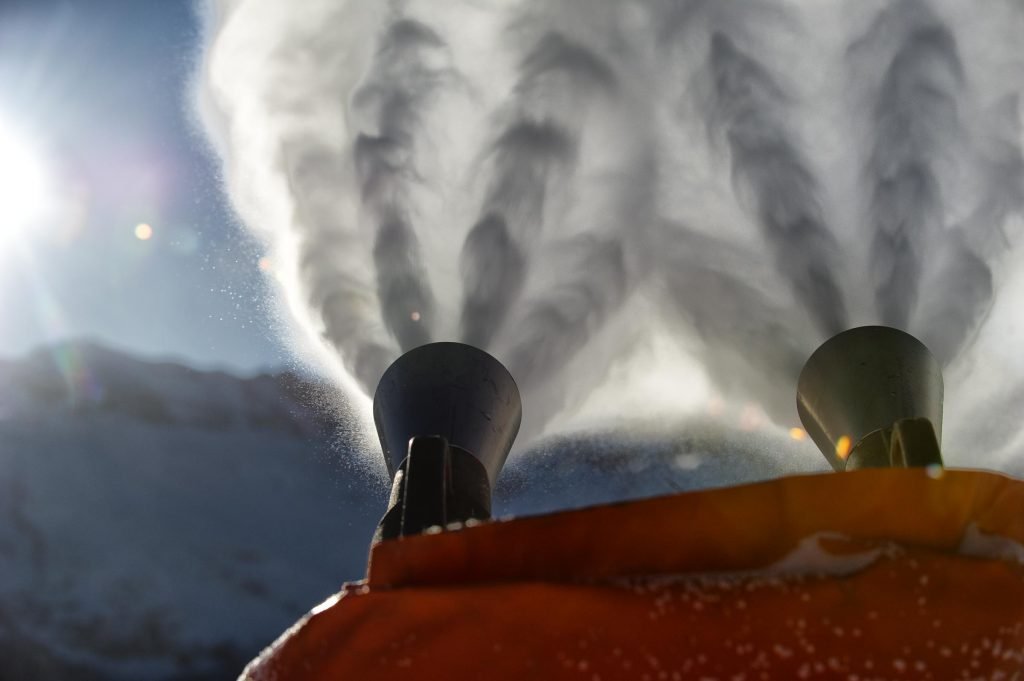
From the end of October to the start of December, the artificial snowmaking system does the majority of it’s winter work. Throughout November, whenever the air temperature is cold enough, the cannons will be firing out snow and the piste bashers will be moving it around and stockpiling it for the winter. The cold nights make for the best snow making conditions so the workers will spend long hours in the dark controlling the direction the cannons fire and dealing with frozen pipes.
Even if it doesn’t snow in autumn, the artificial snow making system does an amazing job of getting most of the pistes open.
How much does it snow?
Zermatt sees an average of 20-25 storms per winter and snowfall averages over 3 metres per year. As we’re a high altitude ski area, there’s very little snowmelt and good ski conditions are almost guaranteed through out the season.
The conditions through the season
October
Autumnal weather brings a mix of sunny and rainy days. Some of this precipitation can fall as snow higher up and ‘the snowline’ tends to gradually descend as the weather gets colder. Piste conditions in the summer ski area are often excellent.
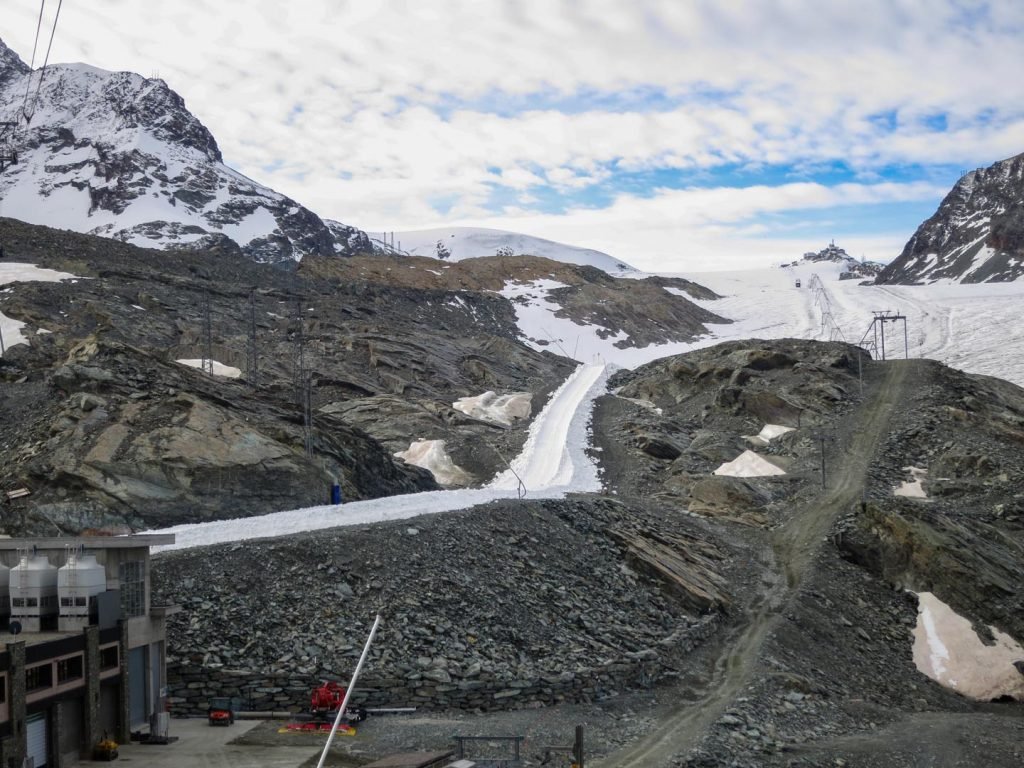
Trockener Steg looking up to the glacier in early October
November
We’re more likely to have storms bring snow at lower altitudes. Even though this snowfall in town might not last, we’re definitely banking on whatever falls higher up to remain and form the base for the ski pistes.
Weather up high on the glacier can feel very wintery. The slopes above Trockener Steg are often in great condition and the pistes are empty!
Klein Matterhorn glacier with perfect November skiing conditions
December & January
The Sunnegga and Gornergrat ski areas open and winter is definitely here. We love these cold days and any storms add to our snowbase. Pistes stay in great condition all day and the snow depths reach levels to allow great off piste skiing. Expect snow in town and fingers crossed for a white Christmas.
Skiing at Sunnegga
February & March
As the days get longer, the need for all the warm layers decreases. We still expect storms to bring top ups to the pistes and fresh track opportunities off piste. This is the time we can start taking lunch on the south facing terraces and skiing days are extending by an hour.
After a March snowfall in Findeln
April
Spring can bring the most varied conditions on the slopes. April showers can bring great powder days and welcome top ups to the pistes. Days also get very warm and south facing or lower slopes slopes can be slushy in the afternoons. It’s not unusual to have fresh powder and super slushy conditions in the same day!
The last week of April sees the closing of the Sunnegga and Gornergrat ski areas but we can still ski on the glacier above Trockener Steg.
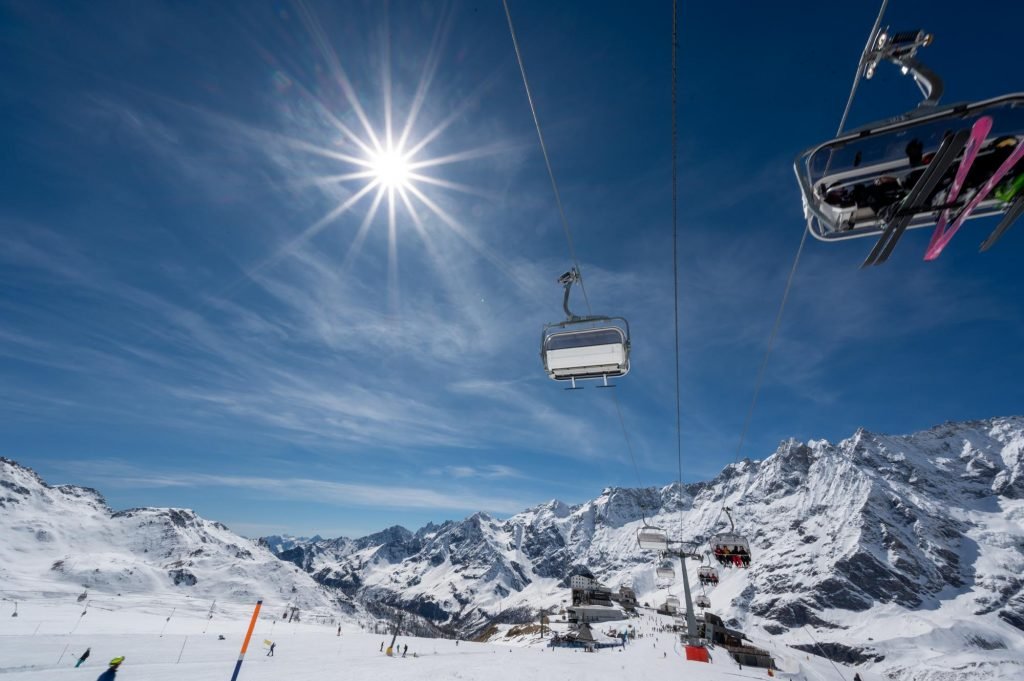
Sunny April conditions in Cervinia
May
Full spring brings the real snowmelt. It can still snow and conditions on the glacier can be great. But in general, the spring to summer transition sees skiing days shorten as afternoon conditions become too slushy to be fun.
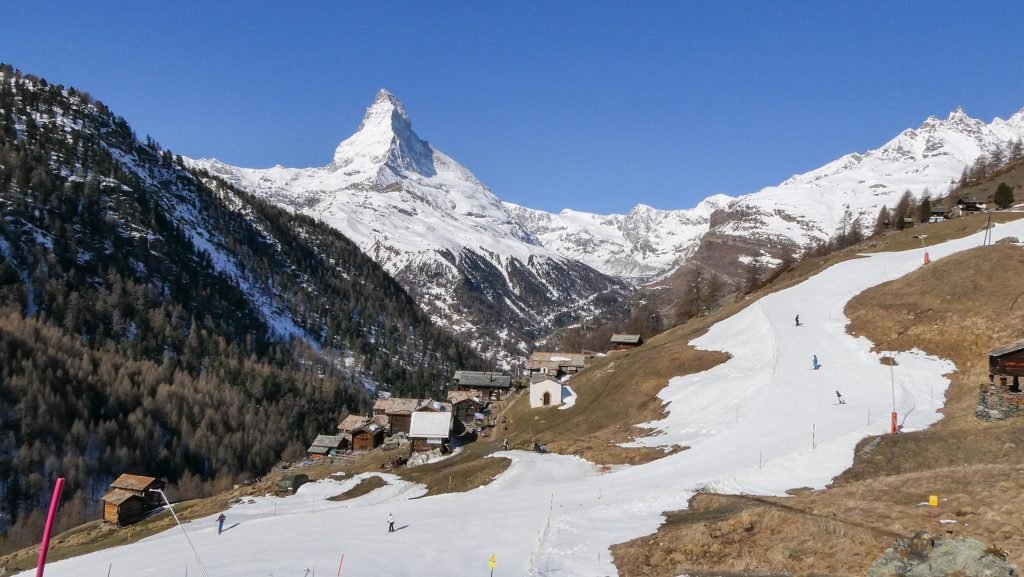
Keeping the pistes going as spring arrives in Findeln
What if it doesn’t snow?
Even if we don’t see a flake of natural snow before the winter starts, almost the entire ski area is now either covered by artificial snowmaking facilities or on a glacier. There’s always good skiing to be found, even in the worst of snowfall winters.